
Thursday, February 5 at 12 pm EST • 9 am PST • 5 pm GMT
Event held via Zoom • Registration Link
Photography Network membership is required to attend.
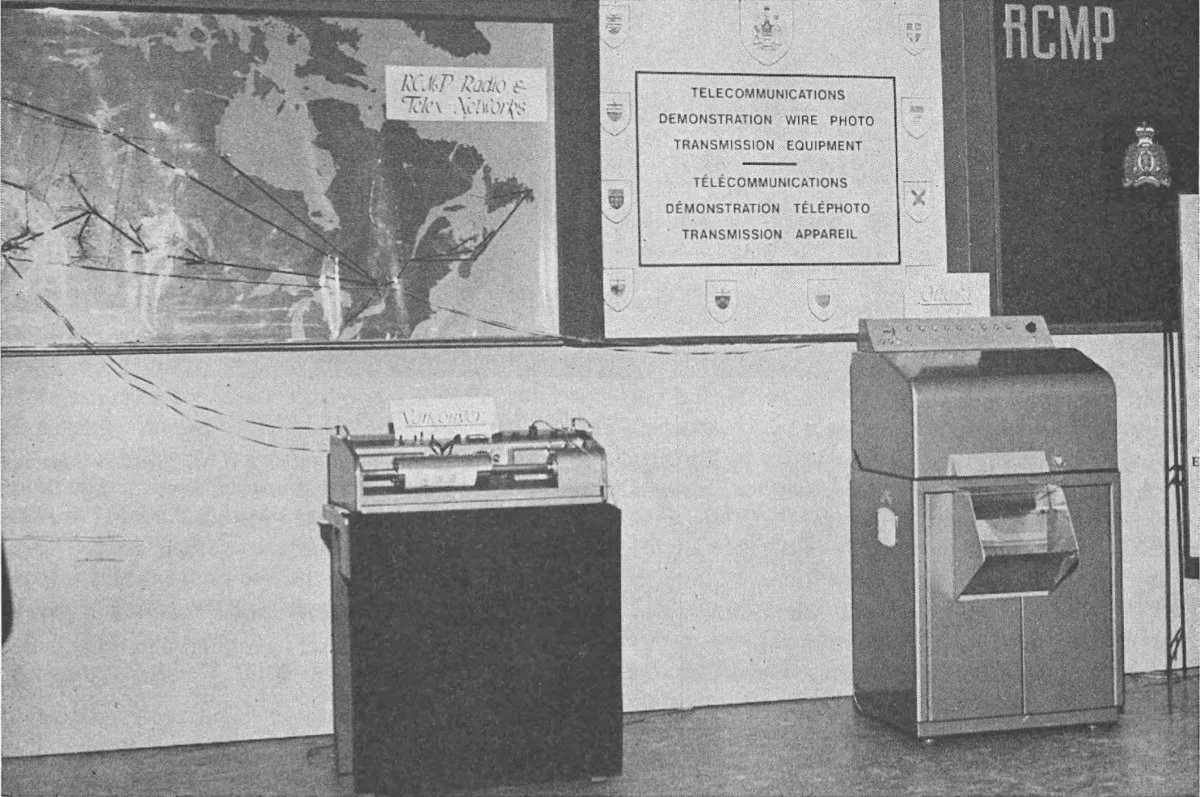
Please join us on Thursday, February 5 at 12 pm to hear from scholar Jamie Jelinski as he explores the Royal Canadian Mounted Police’s use of wirephotos.
In early 1960, the Royal Canadian Mounted Police (RCMP) sent two police identification photographs and a single fingerprint thousands of kilometers across the country via a wirephoto transmitter—essentially a fax machine—provided by the Canadian Press. Motivated by this trial, an RCMP contingent became eager to expand the use of this technology. By 1966, the force had established its own internal wirephoto network. This presentation explores how, despite strong institutional support and backing from political figures, the RCMP’s efforts to implement wirephoto technology were marred by persistent challenges from the outset. Wirephoto, it will be argued, symbolizes the force’s aspirations for technological advancement and its inability to fully realize the technology’s potential. The presentation also highlights the influence of institutional bureaucracy, which allowed wirephoto to be continuously promoted despite its ongoing shortcomings.
About the speakers:
Jamie Jelinski is Lecturer in Visual Culture and Cultural Studies in the Department of Communication and Media at the University of Liverpool. He earned his PhD in Cultural Studies from Queen’s University (2019) and has held postdoctoral fellowships at McGill University, Dalhousie University, and the University of Toronto. Jelinski’s first book, Needle Work: A History of Commercial Tattooing in Canada (2024), was published by McGill-Queen’s University Press. He is currently writing a second book, under contact with Wilfrid Laurier University Press, provisionally titled Unseen Images: Crime, Visual Culture, and Access to Information in Canada. Additionally, he is conducting research for two large projects: one examining the Royal Canadian Mounted Police’s production of facial composites from the 1950s onward, and the other exploring the use of visual culture at Quebec’s forensic crime laboratory in the early twentieth century.