
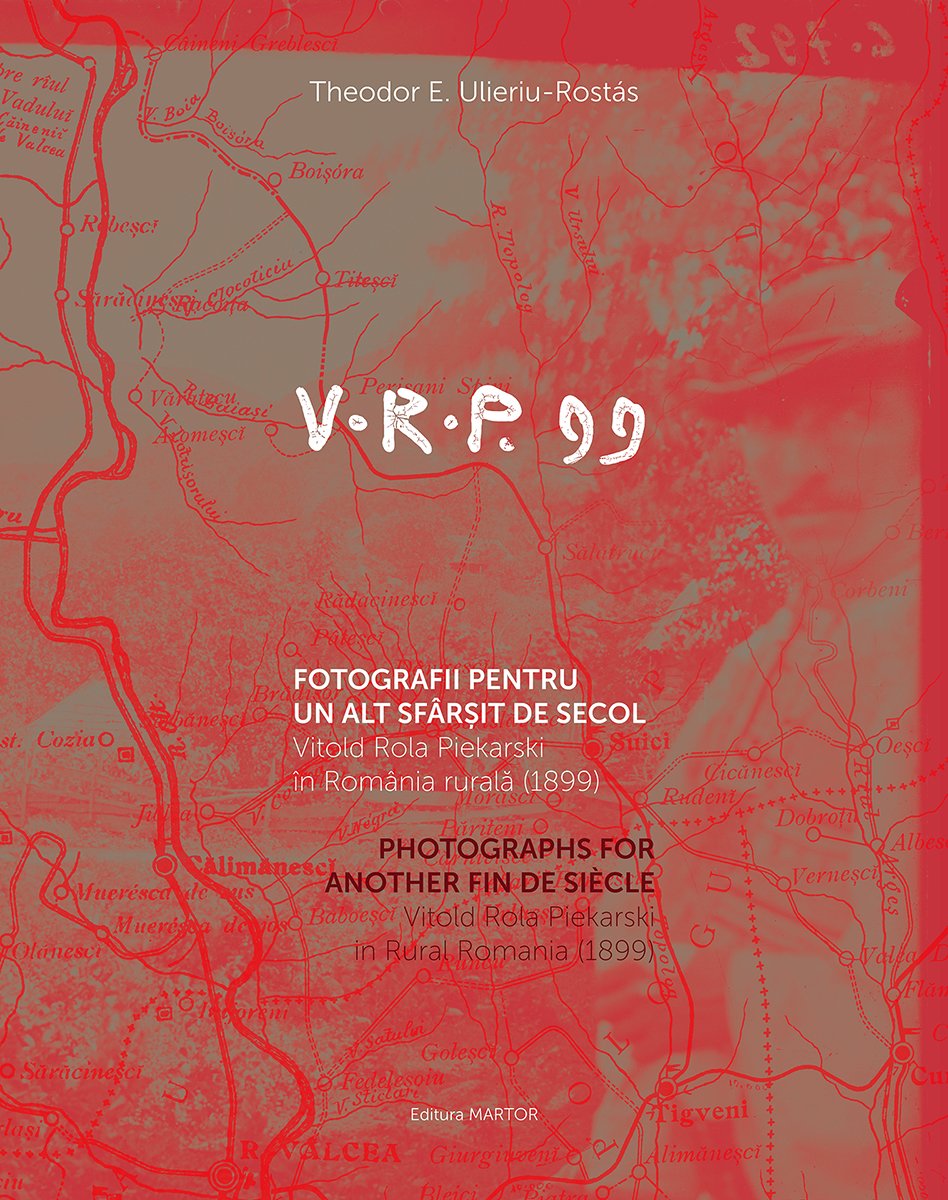
V.R.P. 99. Photographs for Another Fin de Siècle: Vitold Rola Piekarski in Rural Romania (1899)
Theodor E. Ulieriu-Rostás
In the last years of the 19th century, a Polish refugee ventured with his cameras on the country roads of Southern Romania, far from the beaten paths of professional photographers and well beyond the commonplaces of a generation inclined to reduce the rural world, as seen from the city, to the blurred contours of a bucolic landscape. Graphic artist by trade, self-taught by necessity, and a collector of enthusiasms by temperament, he was a socialist and cooperativist militant, an amateur entomologist, archaeologist, ethnographer, and linguist. Having lived in exile in Switzerland, France, and Bulgaria, and traveled as far as Anatolia and Egypt, he found fertile soil for his scholarly inclinations in Târgu Jiu, where he put his enthusiasm to the service of a grass-roots museum. In 1899, his field experience and photographic practice converged in a journey of his own, the legacy of which would remain, until recently, one of the major gaps in the history of photography in Romania. His name was Vitold (Witold) Rola Piekarski, and he sometimes signed his works with the initials V.R.P.
Rediscovered, after a century of oblivion, in the Ethnological Archive of the National Museum of the Romanian Peasant in Bucharest, the glass-plate negatives taken in 1899 by Vitold Rola Piekarski are published for the first time in this volume, accompanied by a study which retraces their journey from the field to the labyrinth of the archives.
Martor, Bucharest
Publication Date: November 10, 2025
